


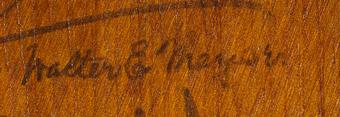
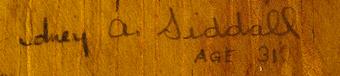
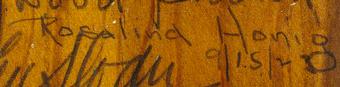
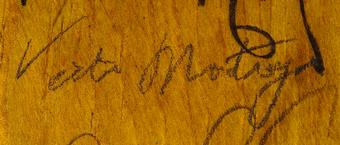
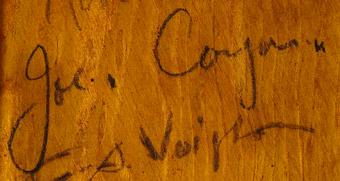
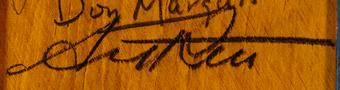
Each signature may be linked to the others by up to 53 thematic connections. Some are common to many signatures; others highlight unusual, yet notable, associations and interests. Friendships are not represented because so many signers were friends. Go to "The Bohemians" to view and interact with all 53 connections.
X
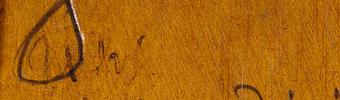
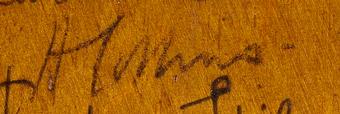
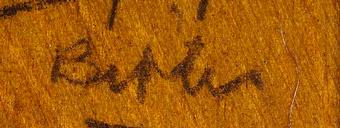
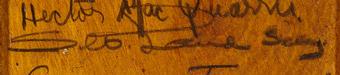
















X
X
X
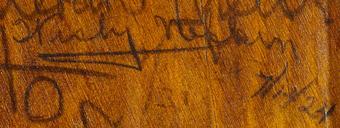
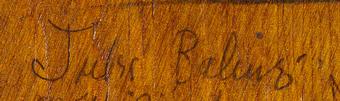
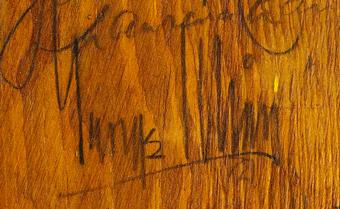
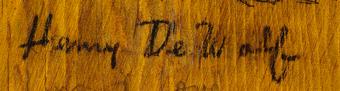
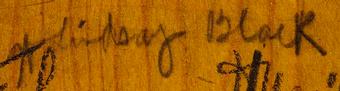
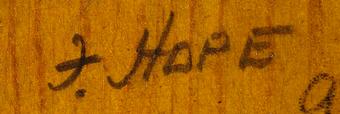
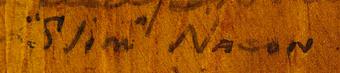
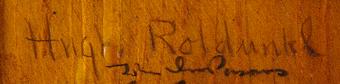
Tramping—walking for the sake of walking itself, over vast distances—had been a popular activity in the nineteenth century, and by the 1920s, it was a familiar enough term for bookshop customer Harry Kemp to take it on as part of his identity; calling himself the “Tramp Poet,” he sought to distinguish himself from the ossifying conventions of middle-class America. Tramping was to many of its practitioners a spiritual occupation as much as anything else. The joys of wandering in the open air are described by many of those who inscribed the bookshop’s door; even the shop’s owner, Frank Shay, decided to take his bookshop on the road in the summers rather than remain trapped behind a counter in the city. Further parallels may be found in the shop customers who took to the sea, sometimes in “tramp steamers,” merchant ships that went from port to port seeking cargo, rather than following a set route or schedule.
- View metadata
X
Creator: Hill, Vernon, 1887-1953
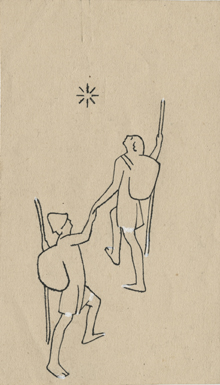
Title: Drawing of Two Men With Backpacks
Item Date: Undated
Medium: Pen and ink on paper
Dimensions: 13.5 cm x 8 cm
Material Type: Drawings
ADA Caption: Drawing of Two Men With Backpacks
Curatorial Department: Art Collection
Collection Name: Art Collection
Stack Location: 68.98.5
Copyright Notices: Some of the documents shown here are subject to U. S. copyright law. It is the user's sole responsibility to contact the copyright holder and secure any necessary copyright permission to publish documents, texts, and images from any holders of rights in these materials. As the owner of the physical object (not the underlying copyright), the Ransom Center requires that you also contact us if you wish to reproduce an image shown here in a print publication or electronically.
Every effort has been made to trace copyright ownership and to obtain permission for reproduction. If you believe you are the copyright owner of an item on this site, and we have not requested your permission, please contact us.
X
One of Vernon Hill's original artworks for Stephen Graham's illustrated Tramping with a Poet in the Rockies (1922)
Graham’s [link: sig] memoir tells the story of summer trip with Vachel Lindsay through Glacier National Park. In the book’s introduction, Graham writes that the two men “discussed emblems and emblematic art and hieroglyphics as we tramped together. The emblems in this book are an attempt to express that side of our mutual experience.”