


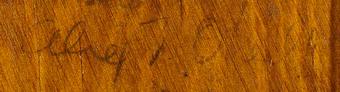
Identified individuals are represented by a biographical sketch, a list of connections to other signatures, and, in most cases, an artifact from the Ransom Centers collections. Help us identify more signatures by submitting your suggested identification.
X

















X
X
X
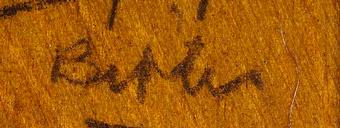
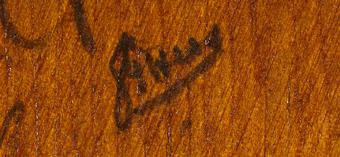
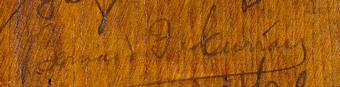
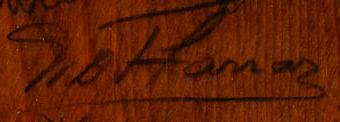
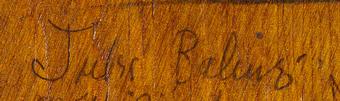
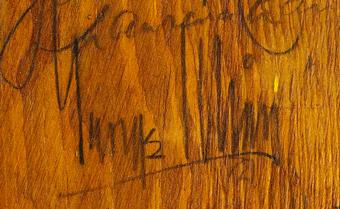
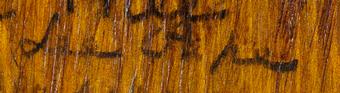
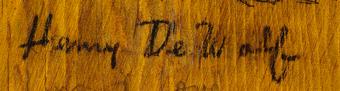
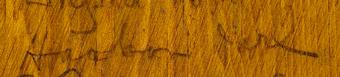
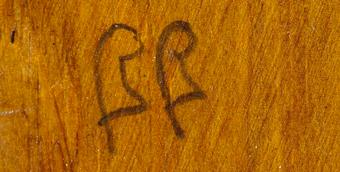
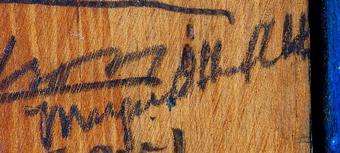
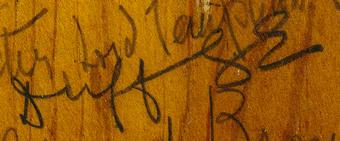
 Location on door: front, panel 1
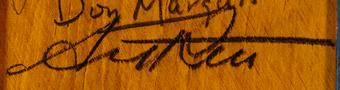
BEN RAY REDMAN
Writer, editor, and critic, Ben Ray Redman (1896-1961) was described upon his death as a debonair gentleman-scholar type, an authentic bookman who was born for a part in a Noel Coward play. A prolific writer of book reviews, he contributed pieces to the New York Times, Harper's, and the American Mercury, and conducted his own column devoted to reprints, "Old Wine in New Bottles," in the New York Herald-Tribune. Additionally, Redman was a long-time contributor to the Saturday Review of Literature and was close to its founders Henry Seidel Canby, William Rose Benét, Amy Loveman, and Christopher Morley. Over the course of his career Redman also worked in film and edited and published books. In early August of 1961, Redman overdosed on sleeping pills after telling his wife that he was despondent over world affairs.


- View slide show
- View metadata
X
Creator: Cabell, James Branch, 1879-1958
Title: Two letters to Ben Ray Redman
Item Date: 2 May 1922; 21 June 1922
Material Type: Manuscript
ADA Caption: Two letters to Ben Ray Redman
Curatorial Department: Manuscripts Collection
Collection Name: James Branch Cabell Collection
Stack Location: Letters: Redman, Ben Ray
Copyright Clearance: Grateful acknowledgement is made to the James Branch Cabell Estate for permission to display this artifact.
Copyright Notices: Some of the documents shown here are subject to U. S. copyright law. It is the user's sole responsibility to contact the copyright holder and secure any necessary copyright permission to publish documents, texts, and images from any holders of rights in these materials. As the owner of the physical object (not the underlying copyright), the Ransom Center requires that you also contact us if you wish to reproduce an image shown here in a print publication or electronically.
Every effort has been made to trace copyright ownership and to obtain permission for reproduction. If you believe you are the copyright owner of an item on this site, and we have not requested your permission, please contact us.
X
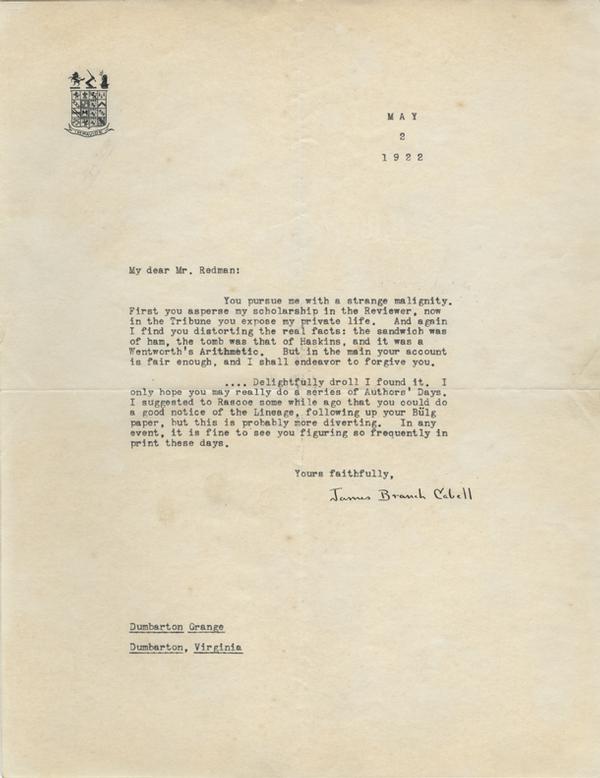
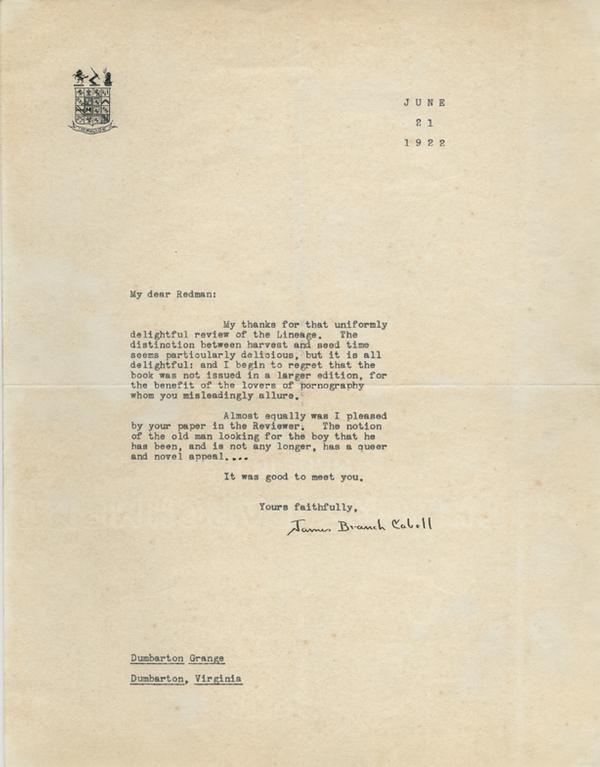
Two Letters from James Branch Cabell to Ben Ray Redman, 2 May 1922 and 21 June 1922
These two letters show the interaction between writer and critic. Redman wrote numerous pieces on Cabell, including a playful article for the Reviewer titled "Bülg the Forgotten" which addressed the influence of the Cabell-invented "Gottfried Johannes Bülg" on the author's writing. The "Lineage" referred to in the correspondence is Cabell's Lineage of Lichfield, a work of invented genealogy. "Rascoe" is critic Burton Rascoe (1892-1957), whose column "A Bookman's Day Book" was appearing in the New York Tribune at that time. Cabell's reference to pornography is significant since the plates for his novel Jurgen (1919) had been seized by the New York Society for the Suppression of Vice and the book was subjected to a lengthy obscenity trial before being exonerated in 1922.